Early 20th Century English Literature
Movements, Masters & Masterworks · c. 1900–1945
Historical Timeline
MODERNISM
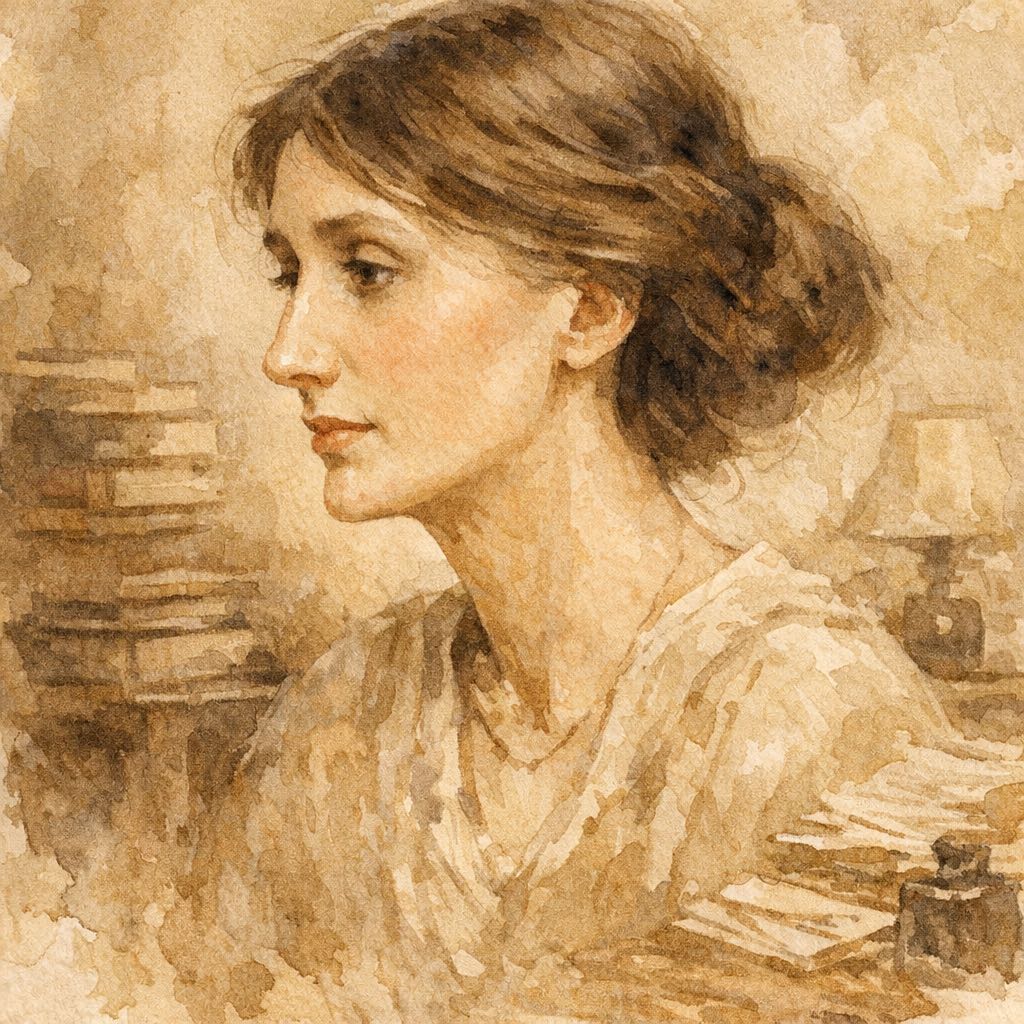
Virginia Woolf
1882–1941 · English
Major Works:
Techniques: Interior monologue, free indirect discourse, lyrical prose, non-linear time
Key Themes: Consciousness, gender, class, the nature of art, mental illness
Central figure of the Bloomsbury Group
Major Works:
- Mrs Dalloway (1925) — one day in London; stream of consciousness
- To the Lighthouse (1927) — memory, loss, passage of time
- Orlando (1928) — gender fluidity across centuries
- A Room of One's Own (1929) — landmark feminist essay
Techniques: Interior monologue, free indirect discourse, lyrical prose, non-linear time
Key Themes: Consciousness, gender, class, the nature of art, mental illness
Central figure of the Bloomsbury Group
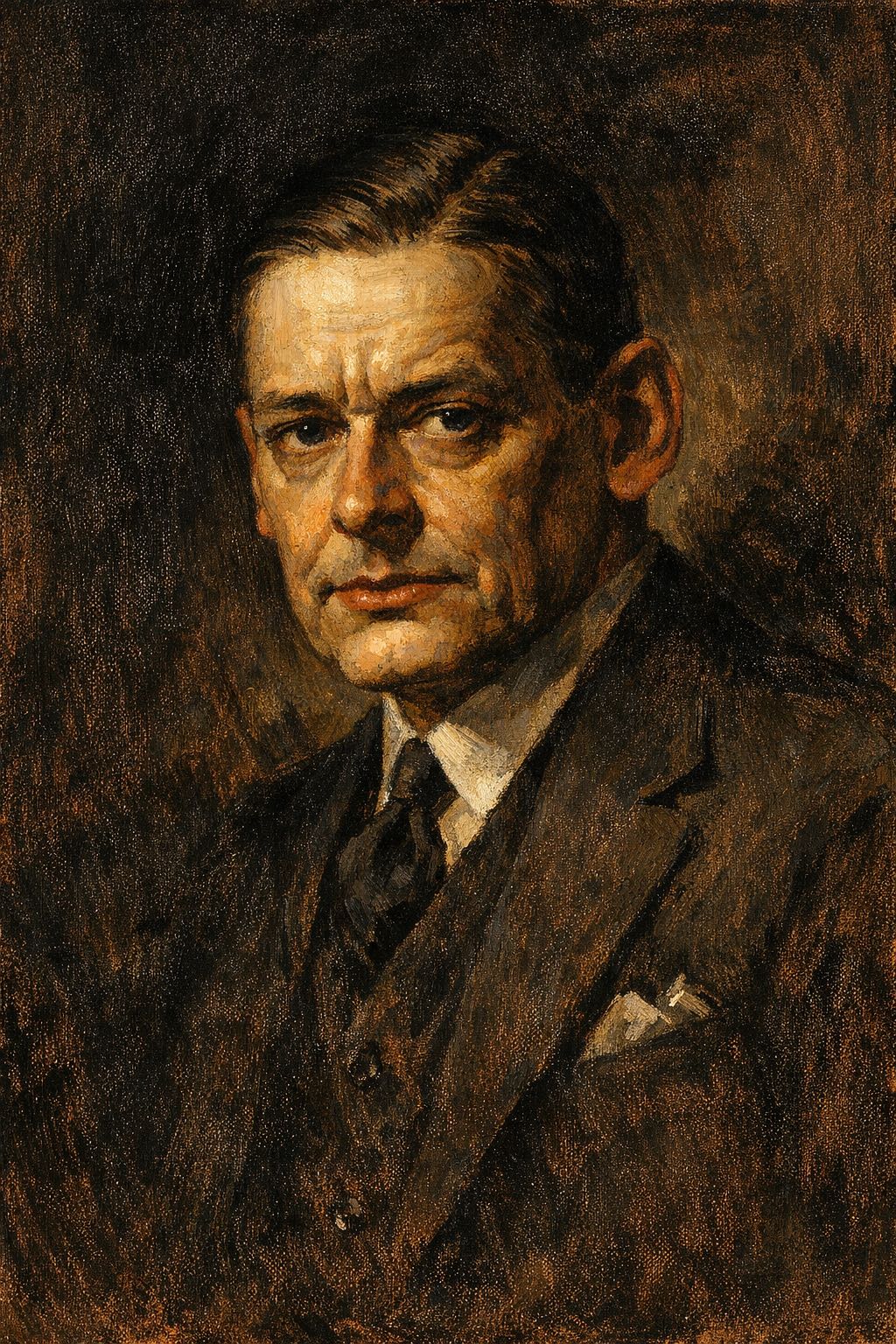
T.S. Eliot
1888–1965 · American-British
Major Works:
Techniques: Allusion (multilingual), fragmentation, collage, dramatic monologue, mythic method
Key Themes: Spiritual emptiness, cultural decline, redemption, tradition vs. individual talent
Nobel Prize in Literature 1948; also a major literary critic
Major Works:
- The Love Song of J. Alfred Prufrock (1915) — modern alienation
- The Waste Land (1922) — fragmented masterpiece; defining modernist poem
- The Hollow Men (1925)
- Four Quartets (1943) — meditation on time & spirituality
Techniques: Allusion (multilingual), fragmentation, collage, dramatic monologue, mythic method
Key Themes: Spiritual emptiness, cultural decline, redemption, tradition vs. individual talent
Nobel Prize in Literature 1948; also a major literary critic
Modernist Techniques Cheat Sheet
- Stream of consciousness — unfiltered inner thought (Woolf, Joyce)
- Fragmentation — broken narrative mirrors broken world (Eliot)
- Mythic method — ancient myths parallel modern life (Joyce, Eliot)
- Free indirect discourse — narrator blends with character's voice
- Non-linear time — memory, flashback, subjective duration
- Imagistic precision — concrete images over abstract statement
1922 — "Annus Mirabilis"
The single most important year in modernist literature:
All appeared within months of each other, redefining what literature could be.
The single most important year in modernist literature:
- Joyce's Ulysses published in Paris
- Eliot's The Waste Land published
- Woolf's Jacob's Room
- Katherine Mansfield's The Garden Party
All appeared within months of each other, redefining what literature could be.
THE LOST GENERATION
Movement Overview
The Lost Generation (c. 1920s–1930s) refers to American writers who came of age during WWI and were profoundly disillusioned by the war's carnage and the hollow materialism that followed.
Core Principles:
Term attributed to Gertrude Stein: "You are all a lost generation."
Core Principles:
- Disillusionment with patriotism & traditional values
- Expatriate life in Paris as creative refuge
- Spare, understated prose ("iceberg theory")
- The American Dream as illusion
- Hedonism masking existential despair
Term attributed to Gertrude Stein: "You are all a lost generation."
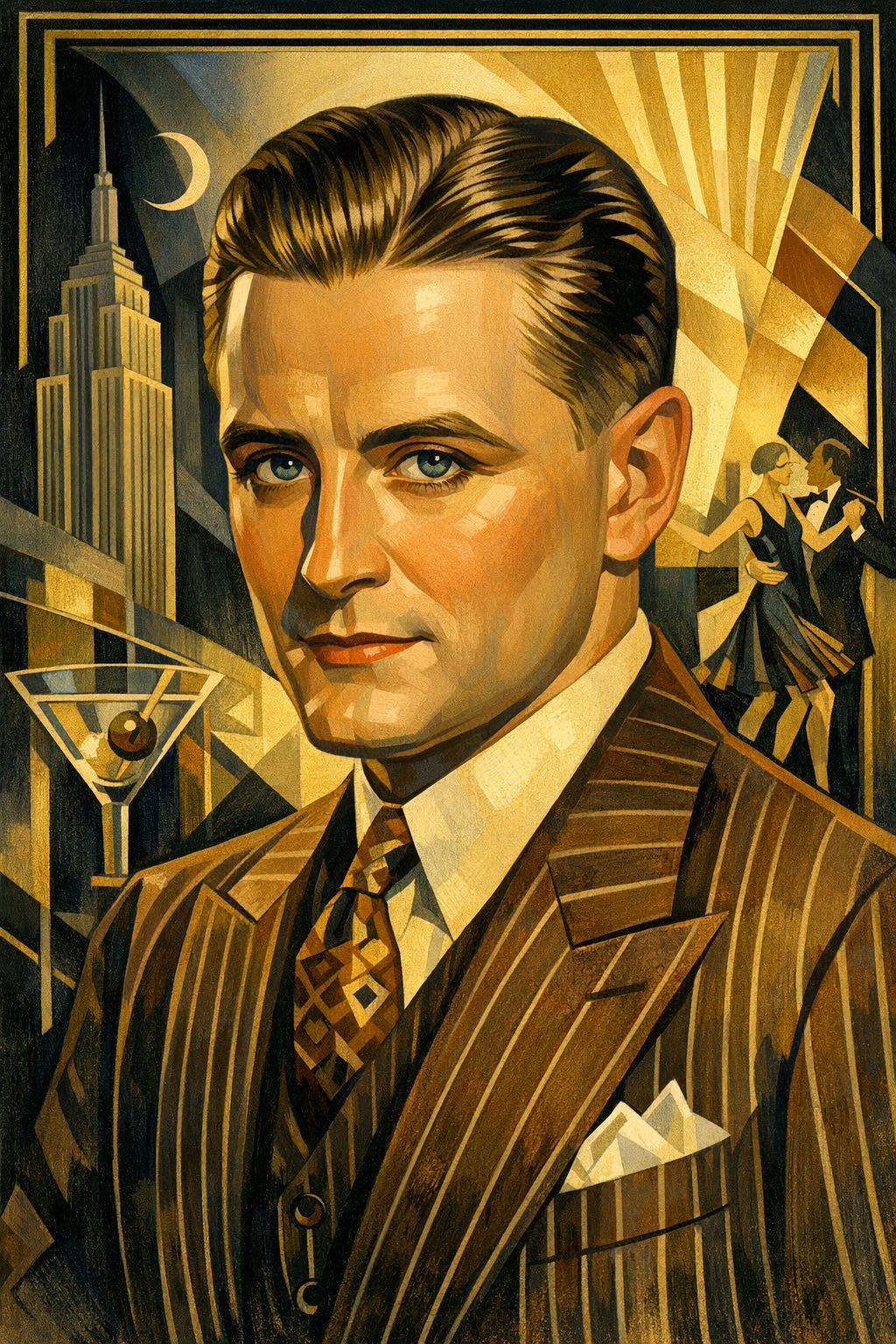
F. Scott Fitzgerald
1896–1940 · American
Major Works:
Style: Lyrical, precise prose; rich symbolism; romantic yet ironic tone
Key Themes: Wealth & class, the illusory American Dream, excess, moral decay, nostalgia
Chronicler of the Jazz Age — a term he popularized
Major Works:
- This Side of Paradise (1920) — Jazz Age debut
- The Great Gatsby (1925) — the American Dream's corruption; green light symbolism
- Tender Is the Night (1934) — glamour & psychological collapse
Style: Lyrical, precise prose; rich symbolism; romantic yet ironic tone
Key Themes: Wealth & class, the illusory American Dream, excess, moral decay, nostalgia
Chronicler of the Jazz Age — a term he popularized
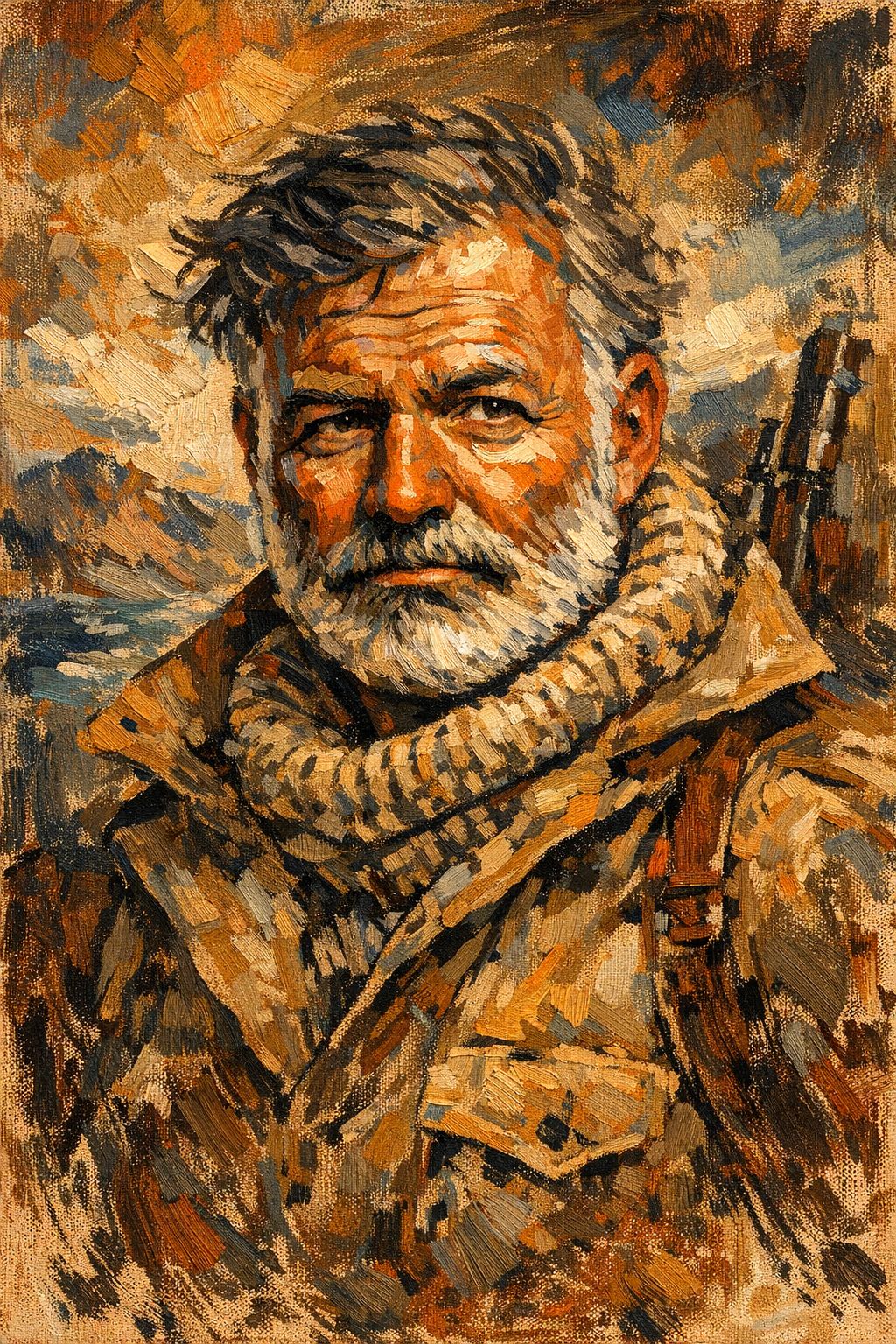
Ernest Hemingway
1899–1961 · American
Major Works:
Style: The "Iceberg Theory" — spare, declarative sentences; meaning beneath the surface; omission as technique
Key Themes: Masculinity, war, courage under pressure, disillusionment, grace under pressure
Nobel Prize in Literature 1954
Major Works:
- The Sun Also Rises (1926) — expatriates in Spain; aimless post-war life
- A Farewell to Arms (1929) — love & loss in WWI
- For Whom the Bell Tolls (1940) — Spanish Civil War
- The Old Man and the Sea (1952)
Style: The "Iceberg Theory" — spare, declarative sentences; meaning beneath the surface; omission as technique
Key Themes: Masculinity, war, courage under pressure, disillusionment, grace under pressure
Nobel Prize in Literature 1954
Paris: Capital of the Lost Generation
In the 1920s, American expatriates gathered on the Left Bank:
Cheap living, artistic freedom, and distance from Prohibition-era America drew writers, painters, and musicians alike.
In the 1920s, American expatriates gathered on the Left Bank:
- Gertrude Stein's salon — literary mentor & hostess
- Shakespeare and Company (Sylvia Beach) — published Ulysses
- Café culture — La Closerie des Lilas, Les Deux Magots
Cheap living, artistic freedom, and distance from Prohibition-era America drew writers, painters, and musicians alike.
HARLEM RENAISSANCE
Movement Overview
The Harlem Renaissance (c. 1918–1937) was a cultural, artistic, and intellectual explosion centred in Harlem, New York City.
Core Principles:
Historical Drivers: Great Migration, post-WWI Black urban communities, NAACP activism, Alain Locke's The New Negro (1925)
Core Principles:
- Celebration of Black identity, heritage & culture
- Reclaiming African American artistic voice
- Jazz, blues & oral tradition as literary influences
- Challenging racial stereotypes through art
- "New Negro" identity — pride, self-determination
Historical Drivers: Great Migration, post-WWI Black urban communities, NAACP activism, Alain Locke's The New Negro (1925)
Parallel 1920s movements
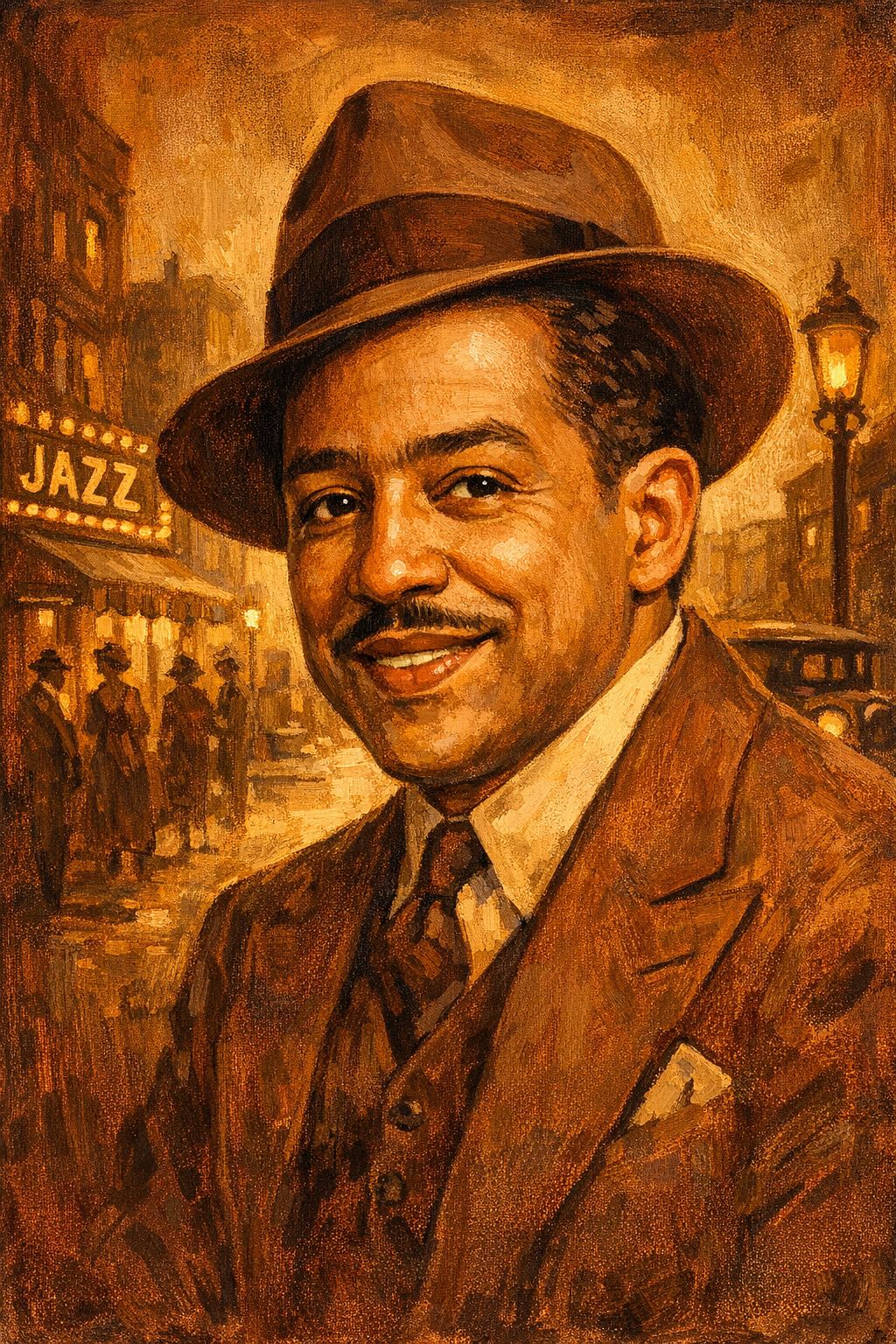
Langston Hughes
1901–1967 · American
Major Works:
Style: Vernacular speech, jazz & blues rhythms, accessible language, oral tradition
Key Themes: Black identity, racial injustice, resilience, the American Dream's exclusion of Black Americans, community
Poet laureate of the Harlem Renaissance
Major Works:
- The Weary Blues (1926) — jazz-inflected poetry
- The Negro Speaks of Rivers (1921) — ancestral pride
- Montage of a Dream Deferred (1951) — Harlem soundscape
- Not Without Laughter (1930) — novel
Style: Vernacular speech, jazz & blues rhythms, accessible language, oral tradition
Key Themes: Black identity, racial injustice, resilience, the American Dream's exclusion of Black Americans, community
Poet laureate of the Harlem Renaissance
Other Key Voices
Zora Neale Hurston (1891–1960)
Their Eyes Were Watching God (1937) — Black female self-discovery; Southern dialect
Claude McKay (1889–1948)
If We Must Die (1919) — defiant sonnet against racial violence; Home to Harlem (1928)
Countee Cullen (1903–1946)
Formalist poet; Color (1925); blended Keatsian lyricism with racial themes
Jean Toomer (1894–1967)
Cane (1923) — hybrid of poetry, fiction, drama exploring Black Southern life
Jazz & Literature
Jazz wasn't just a backdrop — it was a literary technique:
Hughes: "Jazz to me is one of the inherent expressions of Negro life in America."
Jazz wasn't just a backdrop — it was a literary technique:
- Syncopation in Hughes's line breaks
- Call-and-response patterns in poetry
- Improvisation as structural principle
- Blues form (AAB stanza) adopted directly
Hughes: "Jazz to me is one of the inherent expressions of Negro life in America."
IMAGISM
Movement Overview
Imagism (c. 1912–1917) was a brief but hugely influential Anglo-American poetry movement that demanded precision, clarity, and economy of language.
The Three Rules (from Poetry magazine, 1913):
Key Figures: Ezra Pound (founder), H.D. (Hilda Doolittle), Amy Lowell, Richard Aldington, F.S. Flint
Imagism was the gateway to Modernism — its principles of compression and precision influenced virtually every major poet who followed.
The Three Rules (from Poetry magazine, 1913):
- 1.Direct treatment of the "thing," whether subjective or objective
- 2.Use absolutely no word that does not contribute to the presentation
- 3.Compose in the sequence of the musical phrase, not the metronome
Key Figures: Ezra Pound (founder), H.D. (Hilda Doolittle), Amy Lowell, Richard Aldington, F.S. Flint
Imagism was the gateway to Modernism — its principles of compression and precision influenced virtually every major poet who followed.
Ezra Pound
1885–1972 · American expatriate
Major Works:
Role: Founded Imagism; championed "Make It New"; edited Eliot's The Waste Land; championed Joyce
Style: Ideogrammic method, juxtaposition, multilingual allusion, extreme compression
Pound was the impresario of Modernism — his editorial and promotional work shaped the movement as much as his poetry.
Major Works:
- In a Station of the Metro (1913) — iconic two-line Imagist poem
- Hugh Selwyn Mauberley (1920)
- The Cantos (1917–1969) — epic, unfinished modernist masterwork
Role: Founded Imagism; championed "Make It New"; edited Eliot's The Waste Land; championed Joyce
Style: Ideogrammic method, juxtaposition, multilingual allusion, extreme compression
Pound was the impresario of Modernism — his editorial and promotional work shaped the movement as much as his poetry.
In a Station of the Metro
Ezra Pound, 1913
Two lines. Fourteen words. The quintessential Imagist poem — a single vivid image replacing pages of description.
Ezra Pound, 1913
The apparition of these faces in the crowd;
Petals on a wet, black bough.
Two lines. Fourteen words. The quintessential Imagist poem — a single vivid image replacing pages of description.
Pound edited The Waste Land
H.D. (Hilda Doolittle)
1886–1961 · American expatriate
Major Works:
Style: Hard, clear images; classical allusion; spare free verse
Key Themes: Female identity, classical mythology, war, spiritual quest
H.D. was the purest practitioner of Imagist principles and later evolved into a major long-form modernist poet.
Major Works:
- Sea Garden (1916) — crystalline Imagist lyrics
- Trilogy (1944–46) — WWII epic; myth & mysticism
- Helen in Egypt (1961) — feminist reimagining of myth
Style: Hard, clear images; classical allusion; spare free verse
Key Themes: Female identity, classical mythology, war, spiritual quest
H.D. was the purest practitioner of Imagist principles and later evolved into a major long-form modernist poet.
Movement Overview
The Irish Literary Revival (c. 1890s–1930s) sought to reclaim Irish cultural identity through literature, drawing on Celtic mythology, folklore, and the Irish language.
Core Principles:
Key Institutions: Abbey Theatre (1904), Irish Literary Society
The movement bridged Romanticism and Modernism, with Yeats as its towering figure evolving across both.
Core Principles:
- Revival of Gaelic legends & folklore
- Irish national identity through art
- Theatre as vehicle for cultural awakening
- Tension between tradition & modernity
Key Institutions: Abbey Theatre (1904), Irish Literary Society
The movement bridged Romanticism and Modernism, with Yeats as its towering figure evolving across both.
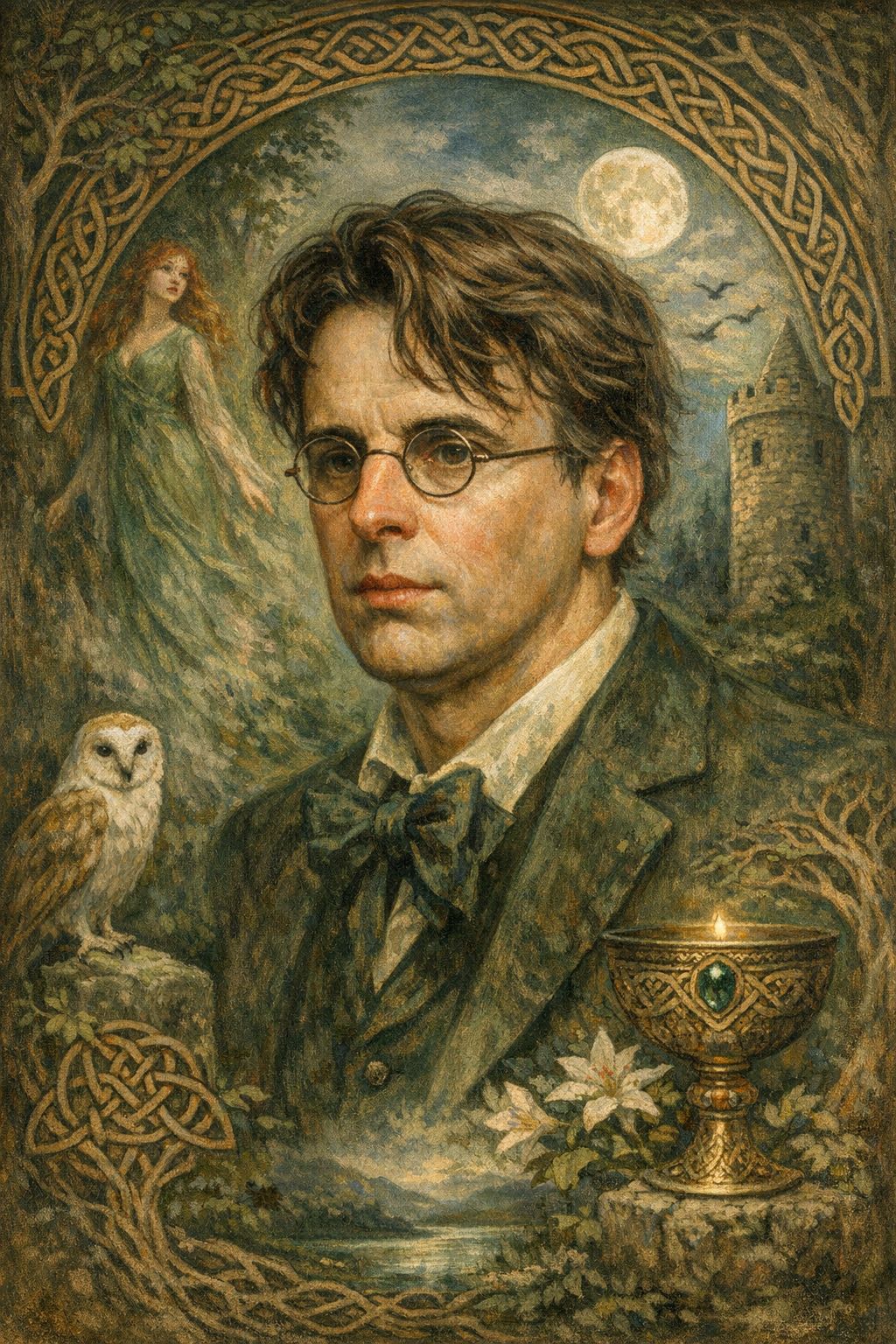
W.B. Yeats
1865–1939 · Irish
Major Works:
Style: Early: Celtic twilight, lyrical romanticism. Late: stark, symbolic, modernist intensity
Key Themes: Irish nationalism, mythology, ageing, the occult, cyclical history (gyres)
Nobel Prize in Literature 1923; co-founded the Abbey Theatre
Major Works:
- The Second Coming (1920) — apocalyptic vision; "the centre cannot hold"
- Easter 1916 (1921) — Irish uprising; "A terrible beauty is born"
- Sailing to Byzantium (1928) — art vs. mortality
- The Tower (1928) — late masterpiece collection
Style: Early: Celtic twilight, lyrical romanticism. Late: stark, symbolic, modernist intensity
Key Themes: Irish nationalism, mythology, ageing, the occult, cyclical history (gyres)
Nobel Prize in Literature 1923; co-founded the Abbey Theatre
J.M. Synge
1871–1909 · Irish
Major Works:
Style: Poetic prose rooted in Hiberno-English dialect; blending realism with lyrical intensity
Key Themes: Rural Irish life, myth vs. reality, death, community
Yeats urged Synge to live on the Aran Islands — the experience transformed his writing.
Major Works:
- The Playboy of the Western World (1907) — caused riots at the Abbey Theatre
- Riders to the Sea (1904) — one-act tragedy of the Aran Islands
Style: Poetic prose rooted in Hiberno-English dialect; blending realism with lyrical intensity
Key Themes: Rural Irish life, myth vs. reality, death, community
Yeats urged Synge to live on the Aran Islands — the experience transformed his writing.
SOCIAL REALISM & CONTROVERSY
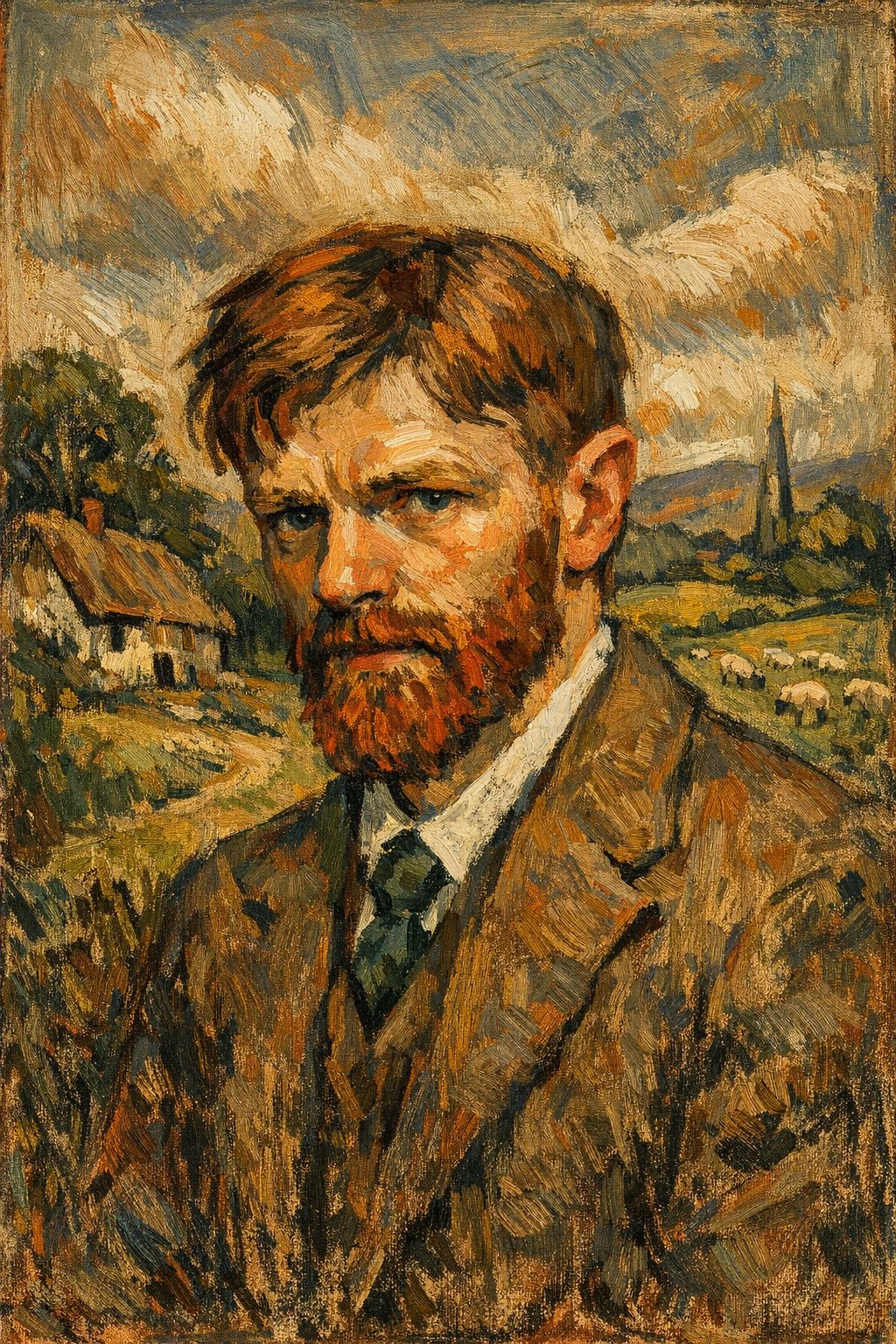
D.H. Lawrence
1885–1930 · English
Major Works:
Style: Visceral, sensual prose; psychological depth; symbolic landscapes
Key Themes: Sexuality, class, industrialisation vs. nature, the body vs. the intellect, human vitality
Lawrence challenged every social convention of his era and paid for it with censorship and exile.
Major Works:
- Sons and Lovers (1913) — autobiographical; class & Oedipal conflict
- The Rainbow (1915) — banned for obscenity
- Women in Love (1920) — relationships & modernity
- Lady Chatterley's Lover (1928) — censorship landmark; not published unexpurgated in UK until 1960
Style: Visceral, sensual prose; psychological depth; symbolic landscapes
Key Themes: Sexuality, class, industrialisation vs. nature, the body vs. the intellect, human vitality
Lawrence challenged every social convention of his era and paid for it with censorship and exile.
Censorship & Literature
Many modernist masterworks were banned or censored:
Censorship battles helped define artistic freedom as a legal right.
Many modernist masterworks were banned or censored:
- Ulysses — banned in US 1921–1933; landmark obscenity trial
- The Rainbow — seized & destroyed by police, 1915
- Lady Chatterley's Lover — banned in UK until 1960 trial
- The Well of Loneliness (Radclyffe Hall) — banned 1928
Censorship battles helped define artistic freedom as a legal right.
Other Key Voices
E.M. Forster (1879–1970)
A Passage to India (1924), Howards End (1910) — class, empire, connection
Joseph Conrad (1857–1924)
Heart of Darkness (1899), Lord Jim (1900) — colonialism, moral ambiguity
Katherine Mansfield (1888–1923)
Short story master; The Garden Party (1922) — Chekhovian epiphanies
Aldous Huxley (1894–1963)
Brave New World (1932) — dystopian satire of technology & conformity
CROSS-CUTTING THEMES
War & Disillusion
WWI shattered the belief in progress, reason, and civilisation. Its impact echoes through:
"The war to end all wars" ended nothing — it created the modern sensibility of doubt, irony, and fragmentation.
- Eliot's The Waste Land — cultural wasteland after the war
- Hemingway's A Farewell to Arms — futility of conflict
- Yeats's The Second Coming — apocalyptic disorder
- Owen & Sassoon — trench poetry (War Poets)
"The war to end all wars" ended nothing — it created the modern sensibility of doubt, irony, and fragmentation.
Identity & Self
Who am I? became literature's central question:
Freud's theories of the unconscious gave writers new tools to explore the inner self.
- Woolf — fluid consciousness, gender as performance
- Joyce — the artist's formation (Portrait)
- Hughes — Black identity, collective memory
- Lawrence — the body's truth vs. social masks
- Yeats — Irish national identity
Freud's theories of the unconscious gave writers new tools to explore the inner self.
Form & Experiment
Every movement shared one conviction: old forms were inadequate.
Form was not decoration — it was meaning.
- Imagism — strip poetry to the image
- Stream of consciousness — capture thought's real flow
- Fragmentation — mirror a fractured world
- Jazz rhythms — music as literary structure
- Free verse — break the metronome of metre
- Mythic method — ancient stories as modern scaffolding
Form was not decoration — it was meaning.
Class & Power
Social hierarchies were both exposed and challenged:
The era saw the rise of labour movements, suffrage, and anti-colonial resistance — all reflected in its literature.
- Lawrence — working-class origins vs. intellectual ambition
- Fitzgerald — wealth's seductive corruption
- Woolf — privilege & its limitations (A Room of One's Own)
- Hughes — racial oppression as class oppression
- Forster — "Only connect" across class divides
The era saw the rise of labour movements, suffrage, and anti-colonial resistance — all reflected in its literature.
TEACHING NOTES & ACTIVITIES
Discussion Questions
- 1.How did WWI change what writers believed literature could or should do?
- 2.Compare Woolf's stream of consciousness with Joyce's — how do their techniques differ?
- 3.Why did so many American writers leave for Paris? What does "exile" mean for creativity?
- 4.How does Hughes use jazz and blues forms as poetic structures? Find specific examples.
- 5.Is The Great Gatsby a celebration or a critique of the American Dream? Defend your view.
- 6.How did censorship shape the reception and legacy of modernist works?
Close Reading Pairs
Pair these texts for comparative analysis:
- The Waste Land (Eliot) ↔ The Second Coming (Yeats) — apocalyptic visions compared
- Mrs Dalloway (Woolf) ↔ Ulysses (Joyce) — one day, one city, two techniques
- The Great Gatsby (Fitzgerald) ↔ The Sun Also Rises (Hemingway) — two sides of Lost Generation disillusionment
- The Negro Speaks of Rivers (Hughes) ↔ If We Must Die (McKay) — two voices of Black resistance
- In a Station of the Metro (Pound) ↔ Sea Garden (H.D.) — Imagist principles in practice
Classroom Activities
1. Movement Mapping — Students create their own visual map of one movement, adding authors and works they discover independently.
2. Style Imitation — Write a paragraph in the style of Hemingway (spare) then rewrite it in the style of Woolf (stream of consciousness).
3. Jazz Poetry Workshop — Listen to 1920s jazz recordings, then write an original poem using Hughes's techniques.
4. Debate: "Is Modernism Elitist?" — Two teams argue whether experimental literature excludes ordinary readers.
5. Timeline Project — Create a multimedia timeline linking historical events to literary publications.
Essential Reading
Poetry:
Fiction:
Non-Fiction:
- Eliot — The Waste Land, Prufrock
- Yeats — The Second Coming, Easter 1916
- Hughes — The Weary Blues (collection)
- Pound — Personae (selected poems)
- H.D. — Sea Garden
Fiction:
- Woolf — Mrs Dalloway
- Joyce — Dubliners, then excerpts of Ulysses
- Fitzgerald — The Great Gatsby
- Hemingway — The Sun Also Rises
- Lawrence — Sons and Lovers
- Hurston — Their Eyes Were Watching God
Non-Fiction:
- Woolf — A Room of One's Own
- Locke — The New Negro (excerpts)
The War Poets
Not a "movement" per se, but essential context:
Their raw, unflinching verse demolished Romantic notions of glorious warfare and paved the way for modernist disillusionment.
Not a "movement" per se, but essential context:
- Wilfred Owen — Dulce et Decorum Est; killed 1918
- Siegfried Sassoon — bitter satire of military leadership
- Rupert Brooke — early idealism (The Soldier)
- Isaac Rosenberg — Break of Day in the Trenches
Their raw, unflinching verse demolished Romantic notions of glorious warfare and paved the way for modernist disillusionment.
The Bloomsbury Group
An informal collective of writers, artists, and intellectuals in London:
They championed aesthetic experience, personal liberty, and intellectual honesty over Victorian morality. The Hogarth Press (founded by the Woolfs) published key modernist texts.
An informal collective of writers, artists, and intellectuals in London:
- Virginia & Leonard Woolf
- E.M. Forster
- Lytton Strachey
- John Maynard Keynes (economist)
- Vanessa Bell (painter)
- Roger Fry (art critic)
They championed aesthetic experience, personal liberty, and intellectual honesty over Victorian morality. The Hogarth Press (founded by the Woolfs) published key modernist texts.
Raw honesty → modernist disillusion
HOW THE MOVEMENTS CONNECT
Movement Influences
Imagism → Modernism
Pound's precision & compression became core modernist technique. Eliot & Woolf absorbed Imagist principles.
Irish Revival → Modernism
Yeats evolved from Celtic romanticism to stark modernist symbolism. Joyce rebelled against Revival's nationalism but shared its Irish obsession.
Modernism ↔ Lost Generation
Shared disillusionment; Stein mentored both movements; Pound edited both camps. Hemingway's spare style owes much to Imagist economy.
Harlem Renaissance ↔ Modernism
Hughes admired Sandburg; jazz influenced all modernists. But the Harlem Renaissance centred Black experience, challenging modernism's often Eurocentric frame.
War Poets → All Movements
Trench poetry's raw honesty made Victorian sentimentality impossible for any writer who followed.
Legacy & Why It Matters
These movements collectively invented modern literature:
Every contemporary novel, poem, and play exists in the shadow of these early 20th-century experiments.
These movements collectively invented modern literature:
- The novel would never return to Victorian omniscience
- Poetry shed metre for free verse
- The short story became an art form
- Literature engaged directly with psychology, politics, and identity
- Writers became public intellectuals
Every contemporary novel, poem, and play exists in the shadow of these early 20th-century experiments.
Gertrude Stein (1874–1946)
The connective tissue between movements:
"A rose is a rose is a rose"
The connective tissue between movements:
- Gave Hemingway the phrase "Lost Generation"
- Mentored Hemingway & Fitzgerald in Paris
- Experimental prose (Three Lives, Tender Buttons)
- Her salon hosted Picasso, Matisse, Pound, and virtually every major modernist
"A rose is a rose is a rose"
Attributed to Stein
🎧 Audio Lecture: A Survey of Movements & Masters
0:00
0:00
Early 20th Century English Literature: A Survey of Movements and Masters
Audio
IRISH LITERARY REVIVAL
Movement Overview
Modernism (c. 1900–1940s) was the dominant literary movement of the early 20th century, arising from a profound sense that Victorian conventions could no longer capture modern experience.
Core Principles:
Historical Drivers: Industrialisation, WWI trauma, Freudian psychology, Einstein's relativity, urbanisation
Core Principles:
- Break with tradition & formal experimentation
- Stream of consciousness & interior monologue
- Fragmentation, juxtaposition, allusion
- Mythic parallels layered onto modern life
- Subjectivity of time & perception
Historical Drivers: Industrialisation, WWI trauma, Freudian psychology, Einstein's relativity, urbanisation
Shared disillusionment
Imagism → Modernism
Yeats bridges both
Experimental prose pioneer
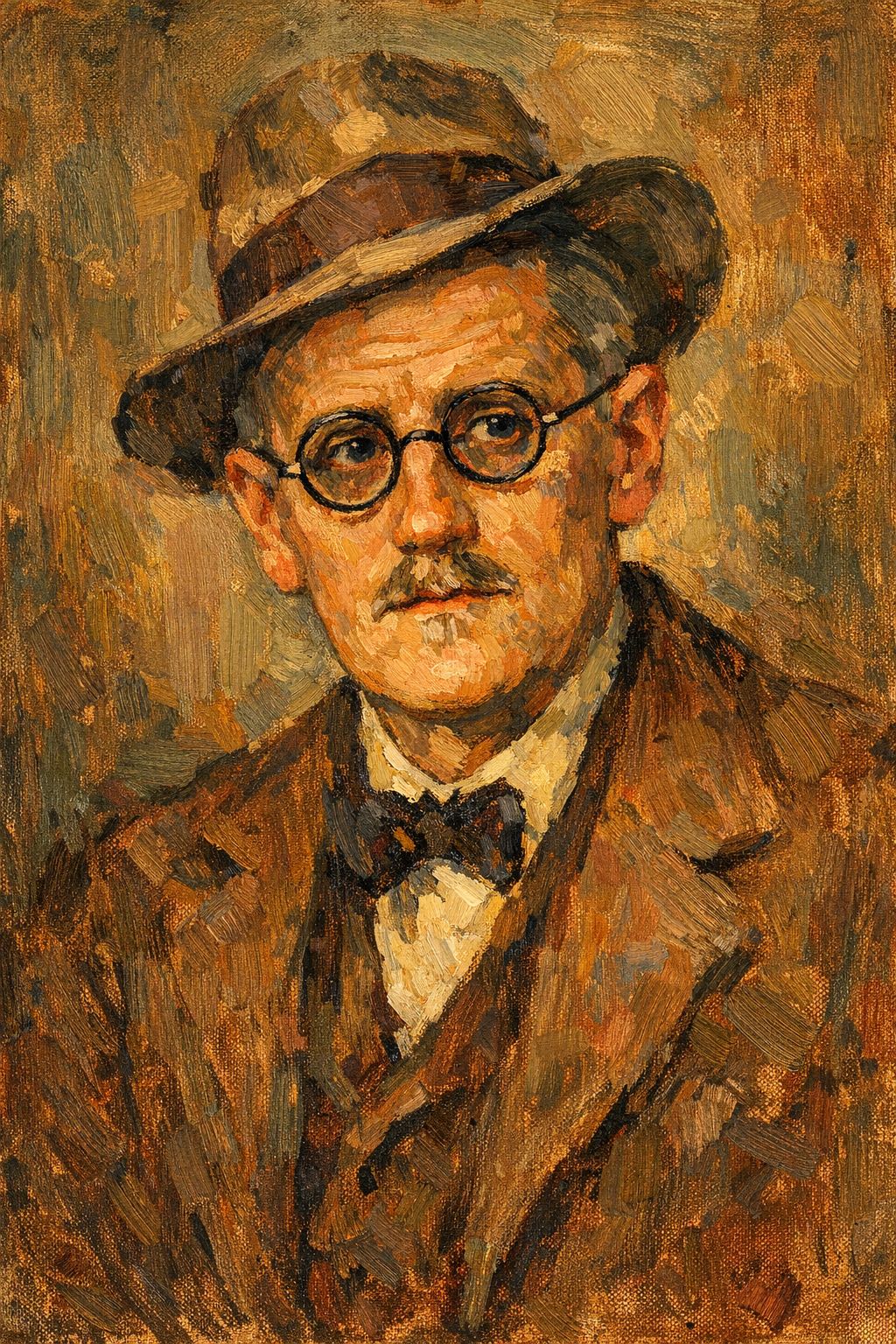
James Joyce
1882–1941 · Irish
Major Works:
Techniques: Stream of consciousness, mythic parallels ("mythic method"), linguistic invention, interior monologue
Key Themes: Irish identity, exile, religion, language as medium & subject
1922's Ulysses is often called the greatest English-language novel of the 20th century
Major Works:
- Dubliners (1914) — short stories; epiphany technique
- A Portrait of the Artist as a Young Man (1916) — bildungsroman
- Ulysses (1922) — epic reimagining of Homer's Odyssey in a single Dublin day; revolutionised the novel
- Finnegans Wake (1939) — experimental dream-language
Techniques: Stream of consciousness, mythic parallels ("mythic method"), linguistic invention, interior monologue
Key Themes: Irish identity, exile, religion, language as medium & subject
1922's Ulysses is often called the greatest English-language novel of the 20th century